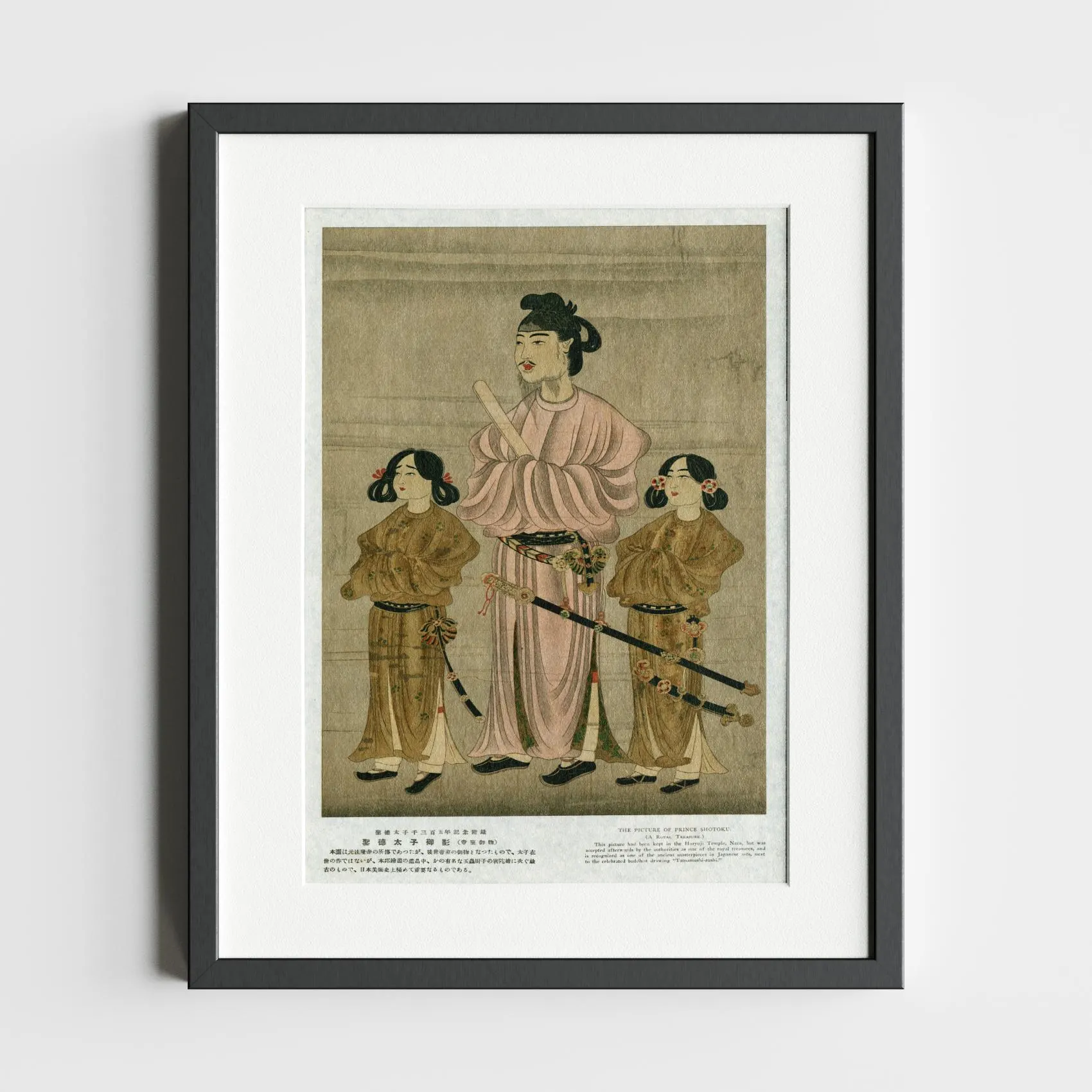
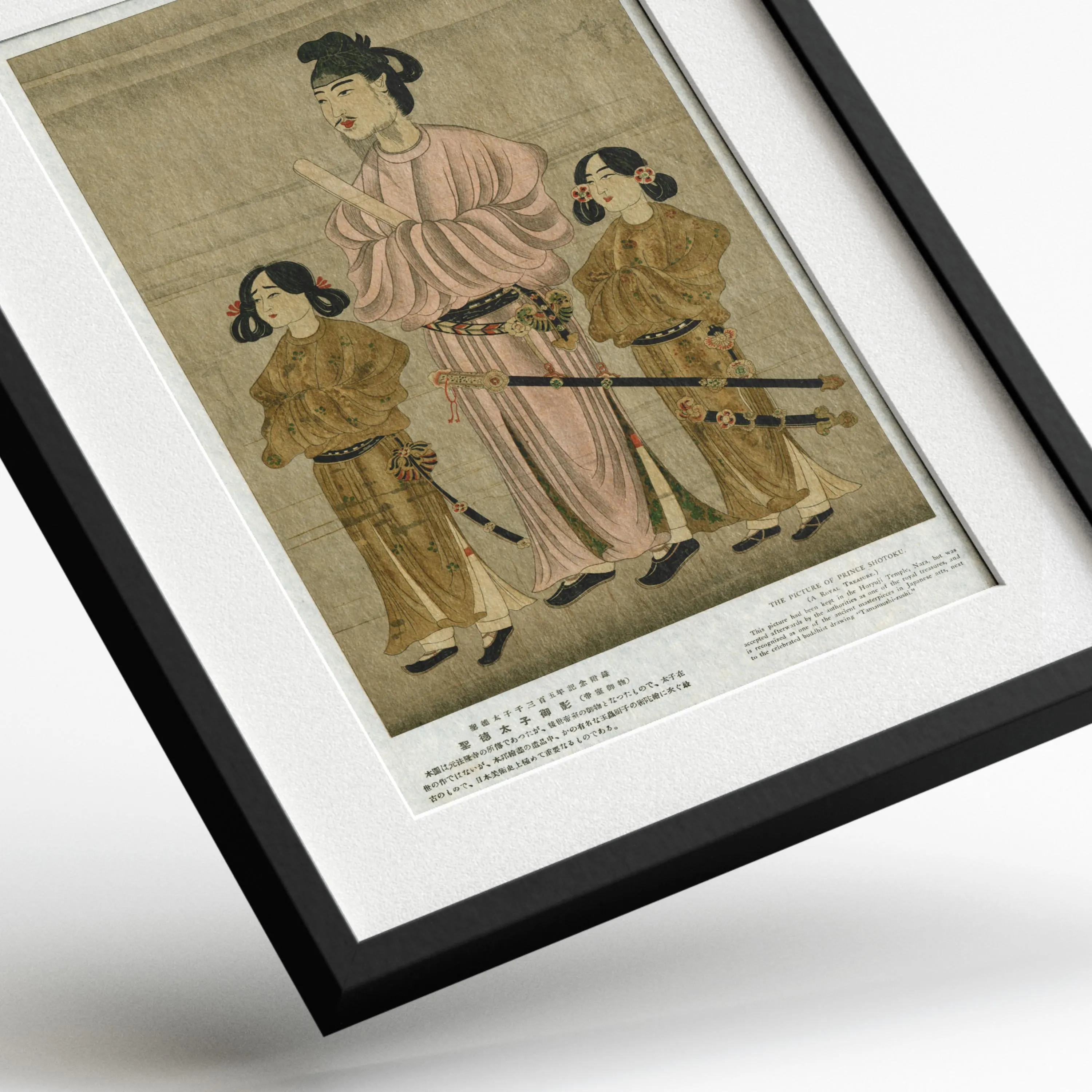
• This striking print is a revered Portrait of Prince Shōtoku (聖徳太子御影), one of Japan’s most treasured artworks. Originally kept at Hōryū-ji Temple in Nara, it was later designated as a Royal Treasure (帝室御物)—a title reserved for the nation’s most culturally and spiritually significant artifacts. While not painted during the prince’s lifetime, this image is considered one of the oldest known visual depictions of Shōtoku Taishi and ranks just behind the famous Tamamushi-zushi in terms of historical importance within early Japanese art.
Prince Shōtoku (574–622) was a central cultural figure of the Asuka period. As regent and political visionary, he introduced Buddhism as a state religion, launched Japan’s first constitutional code (the Seventeen-Article Constitution), and promoted Chinese learning, arts, and architecture. His legacy includes the founding of several temples and a symbolic unification of spiritual and civic life in Japan. Even centuries after his death, he remains a semi-divine cultural hero, widely revered and mythologized.
This richly detailed portrait captures the profound dignity and presence of Prince Shōtoku, whose legacy helped define classical Japanese civilization. Whether displayed in a study, meditation space, or hallway, this piece radiates calm authority and cultural depth.
What makes this artwork truly unique is the English-language commentary from 1920s Japan, included alongside the print. Rather than requiring deep expertise in Buddhist art or historical context, this thoughtful description guides you—and your guests—through the significance and symbolism of the image. It offers not only insight into Prince Shōtoku’s role in Japanese history but also reflects how his story was interpreted and honored during the early 20th century.
Unlike other prints, this edition isn’t just a reproduction—it’s a preserved cultural transmission from 1920s Japan, offering an authentic historical lens into both ancient and modern admiration for one of Japan’s greatest cultural figures.